
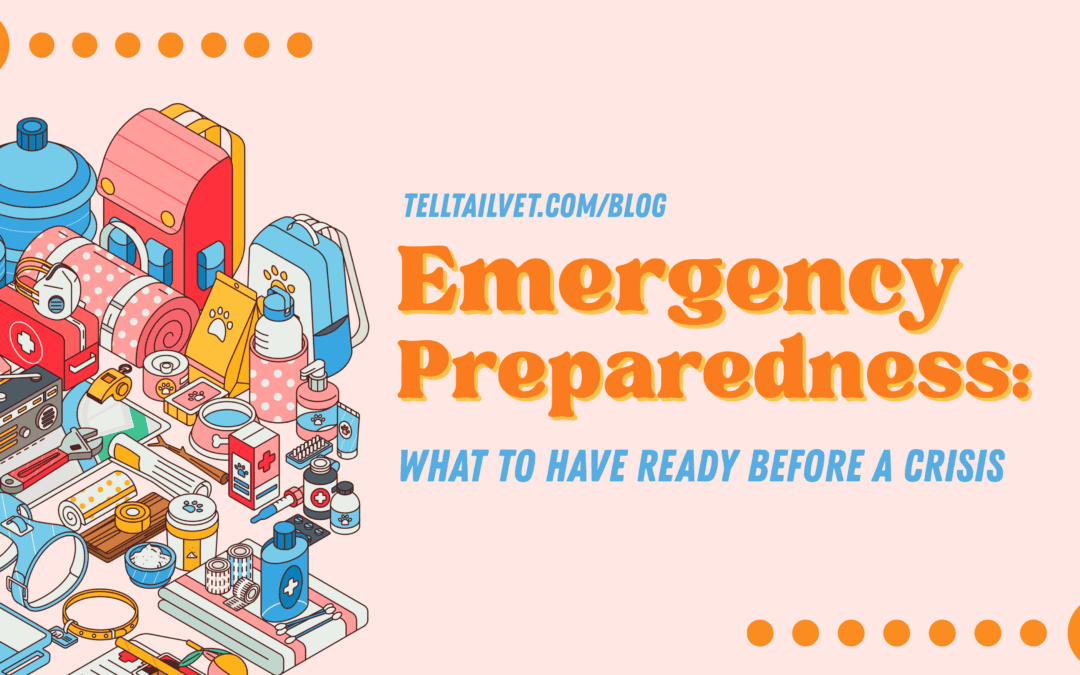
Nobody plans to have a pet emergency. That is exactly why they catch people off guard. A dog eats something toxic at 9pm. A cat is hit by a car. Wildfire smoke shows up and an evacuation order follows an hour later. In those moments, the people who handle it best are rarely the calmest ones. They are the ones who already had a plan and the right things within reach.
At Tell Tail Veterinary Urgent Care, we see the difference preparation makes every week. Owners who arrive with records, a clear timeline, and a pet in a secure carrier give us a head start that matters. This post covers what to have ready before you need it, so that when something happens, your only job is to act.
Start With Information
The most useful emergency supply costs nothing. It is information, and it should be easy to find in under a minute.
Keep these together, in print and on your phone:
- Vaccination records, including the rabies certificate
- A current list of your pet’s medications, doses, and any known allergies
- Your regular veterinarian’s name and phone number
- Your pet’s microchip number and the registry it is enrolled in
- A recent, clear photo of your pet from the front and side
- Any major medical history, such as chronic conditions or past surgeries
A photo on your phone also doubles as your best tool if your pet goes missing. Make sure the microchip registration is current, with your active phone number. A chip with outdated contact information is one of the most common reasons lost pets are not reunited quickly.
Save these numbers in your phone today:
- Your regular veterinarian
- Tell Tail Veterinary Urgent Care: (619) 282-8035
- ASPCA Animal Poison Control: (888) 426-4435
- Pet Poison Helpline: (855) 764-7661
Both poison control services may charge a consultation fee, and both are worth it when you are not sure whether something your pet ate is dangerous.
Build a Pet First Aid Kit
A basic kit will not replace veterinary care, but it lets you stabilize a situation and get to us safely. Store it in one container where everyone in the household knows to find it.
What to include:
- Gauze pads and rolls
- Non-stick bandage pads
- Self-adhesive bandage wrap (the kind that sticks to itself, not to fur)
- Sterile saline for rinsing wounds and eyes
- Blunt-tipped scissors and tweezers
- Disposable gloves
- A digital thermometer and a lubricant (normal temperature for dogs and cats is roughly 100.5 to 102.5°F)
- A clean towel or blanket, useful for restraint, warmth, or as a stretcher
- A soft muzzle or a strip of cloth, because even the gentlest pet may bite when in pain
- An e-collar (cone) in a size that fits your pet
- Styptic powder for minor nail bleeding
- An oral syringe for administering liquids when directed by a vet
What to leave out: Do not keep hydrogen peroxide as your go-to for wounds, and do not plan on inducing vomiting at home unless a veterinarian or poison control specifically tells you to. Human pain medications such as ibuprofen, acetaminophen, and naproxen are dangerous to pets and should never be given. Check the kit twice a year and replace anything expired.
Pack a Go-Bag for Evacuations
Southern California residents know that fire, earthquakes, and other disasters can mean leaving home fast. Fall brings Santa Ana wind conditions and elevated wildfire risk across San Diego County, which makes this a good time to build your bag if you have not already.
The rule of thumb is simple: if it is not safe for you to stay, it is not safe for your pet to stay. Pets should never be left behind. Plan for them the same way you plan for yourself.
Pack for at least three days, and a full week if you can:
- A sturdy carrier or crate for each cat and small dog, labeled with your name and phone number
- Leash, harness, and a spare collar with a current ID tag
- Food and water, plus collapsible bowls
- A one-week supply of any medications, rotated so they do not expire
- Litter, a small scoop, and waste bags
- A few familiar items, such as a blanket or toy, to lower stress in an unfamiliar place
- Copies of the records listed above, in a waterproof bag
Know your options before you need them. Many emergency shelters do not accept pets, and hotels vary. Identify a few pet-friendly places to stay ahead of time, including friends or family outside your area. Ask a trusted neighbor to be your emergency contact who can get to your pet if you are away and an evacuation order is issued.
Practice once. Get your pet used to the carrier now, not on the day you need it. A cat who has never been in a carrier is hard to catch in a hurry. Leave the carrier out with a blanket inside so it becomes a normal place to rest.
Know Where You Are Going
In a real emergency, you do not want to be searching for directions or wondering who is open.
Decide ahead of time where you would go for a sudden injury, a toxic ingestion, or trouble breathing after hours. Save the address in your phone’s maps app so a route is one tap away. Share the plan with everyone in your household, including anyone who watches your pet.
If you are traveling, look up the nearest emergency or urgent care vet at your destination before you leave. We cover this in more detail in our post on travel emergencies.
Know What an Emergency Looks Like
Preparation also means recognizing when to move. Do not wait to see if it passes if your pet:
- Is struggling to breathe, or has blue, gray, or very pale gums
- Collapses, cannot stand, or seems suddenly weak
- Is having a seizure, or has multiple seizures in a row
- Has been hit by a car or fallen from a height, even if they seem fine
- Has eaten something toxic, or you suspect they have
- Is bleeding heavily, or a wound will not stop bleeding after 10 minutes of pressure
- Is straining to urinate with little or nothing coming out
- Has a swollen, hard belly with retching and restlessness
When in doubt, call us on the way. We would much rather talk through a situation that turns out to be minor than have you wait on one that was not.
A Few Things That Help in the Moment
- Stay calm and move your pet carefully. Support the body, and use a blanket or board as a stretcher for a large dog with a suspected back, leg, or neck injury.
- Protect yourself. Pets in pain can bite or scratch. A muzzle or a cloth wrap around the snout can help, but never use one on a pet who is vomiting or struggling to breathe.
- Bring what you can. The packaging of anything your pet ate, a list of medications, and your phone with their records are all useful.
- Consider a pet first aid and CPR class. Many local organizations offer them, and an hour of hands-on practice builds real confidence.
Make It a Habit
Preparedness is not a one-time project. Pick two dates a year, such as the start of wildfire season and the start of the new year, to do a quick check:
- Refresh the photo and update any records
- Rotate medications and food
- Replace anything expired in the first aid kit
- Confirm your microchip contact information is current
- Make sure everyone in the household knows where the kit and go-bag live
It takes about an hour, and it can make the worst day much more manageable.
About Tell Tail Veterinary Urgent Care
Tell Tail Veterinary Urgent Care provides same-day urgent care for dogs and cats in San Diego. No appointment needed. When something happens and your regular vet is not available, we are here.