

The #1 Culprit: Foxtails
Foxtails are the barbed seed heads of certain wild grasses that dry out in spring and summer. They’re designed by nature to burrow into soil and they do the exact same thing to your pet’s body.
What makes foxtails uniquely dangerous is that they don’t stop moving. Once embedded, the barbs allow them to travel inward through skin, muscle, and tissue. They can migrate from a paw to a leg, from a nostril toward the brain, from the ear canal deep into the skull. Left untreated, they cause serious infection, abscess, and in some cases life-threatening complications.
Where foxtails embed most often:
- Between the toes and paw pads
- Inside the ear canal
- In the nose (causing violent, sudden sneezing)
- Around the eyes and eyelids
- In the mouth, throat, or gumline
- Under the skin along the belly or legs (entry often invisible)
Signs a foxtail may be embedded:
- Sudden, frantic licking or chewing of one paw
- Head shaking or pawing at one ear
- Violent, persistent sneezing — sometimes with bloody discharge
- Squinting, tearing, or visible eye irritation
- A small lump under the skin that appears quickly
- Limping with no obvious wound
Dogs with long or thick coats, and those who love to run through tall grass, are at the highest risk. However, foxtails are an equal-opportunity hazard. We see them in short-haired dogs and outdoor cats too.

Other Foreign Objects We Commonly Remove
Foxtails and thorns get the headlines, but spring brings plenty of other culprits:
- Grass awns — similar to foxtails, can embed in similar locations
- Splinters and wood shards — from decks, fences, fallen branches
- Burrs and seed pods — can mat into fur and press into skin if not found
- Insect stingers — bees and wasps become more active in spring; stings to the mouth, nose, or face warrant a vet visit
When to Plan a Vet Visit
If you notice any of the following, call your veterinarian or visit an urgent care:
- Your pet is sneezing violently and repeatedly (especially one-sided)
- You can see a foxtail or thorn but cannot safely remove it yourself
- There is swelling, discharge, or odor from any area
- Your pet is limping and the paw shows any puncture, swelling, or heat
- A lump appears suddenly under the skin
- Your pet is pawing at its eye or the eye looks cloudy, red, or swollen
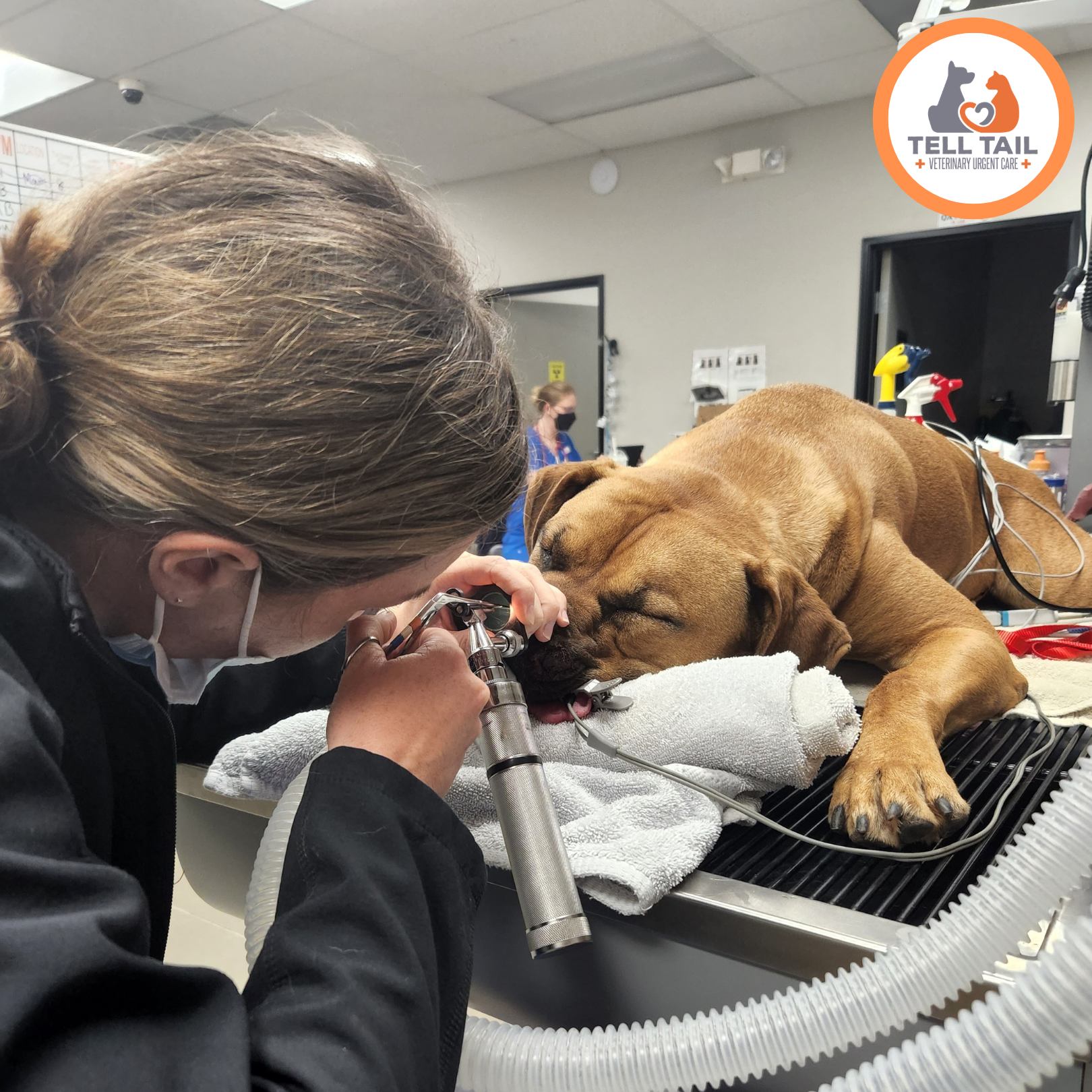
Do not attempt to dig out an embedded object yourself. Probing at home can push it deeper, break it apart, or introduce bacteria. Your vet team can locate and remove foreign objects safely, often with sedation to keep your pet comfortable.
How to Reduce the Risk
- Check your dog from nose to tail after every outdoor adventure. Run your fingers through fur, check between every toe, look in and around the ears
- Keep your own yard mowed and cleared of dry grassy patches where foxtails grow
- Consider a protective boot or paw covering for dogs who regularly hike through foxtail-heavy areas
- Brush long-coated dogs immediately after outdoor time. Burrs and awns are easiest to remove before they work into the skin
- If you hike in areas known for foxtails, inspect your pet before you even get back in the car
About Tell Tail Veterinary Urgent Care
Tell Tail Veterinary Urgent Care (TTVUC) provides expert urgent and emergency care for dogs and cats — no appointment needed. Foreign object removal, wound care, and injury assessment are among the most common reasons our patients visit us in spring. We’re here to help when something just doesn’t seem right with your pet.