
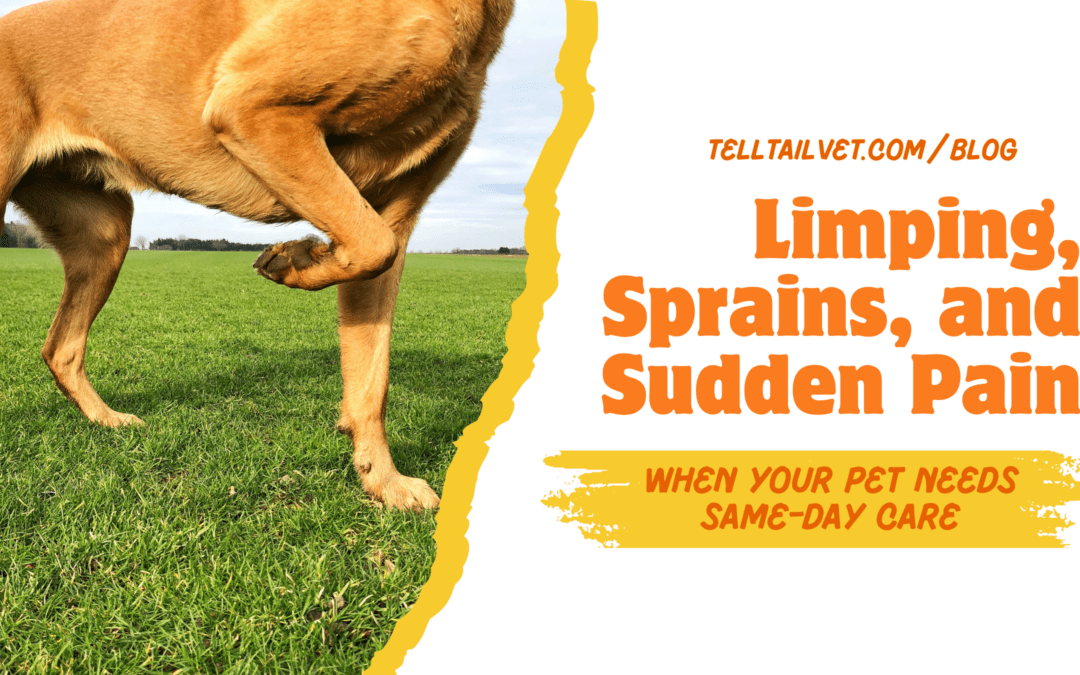
That question — wait or go now? — is exactly what we’re here to help you answer. At Tell Tail Veterinary Urgent Care, limping and sudden pain are among the most common reasons pets come through our doors. Here’s how to read the situation.
Why Pets Limp: The Short List
Limping is a symptom, not a diagnosis. It can mean a lot of different things, ranging from minor to serious:
- A thorn, foxtail, or foreign object in the paw
- A cut, scrape, or cracked paw pad
- A sprain or soft tissue strain
- A torn or overstretched ligament (the CCL in dogs is the most common)
- A dislocated joint
- A fracture
- Arthritis flare (common in older pets)
- Bone infection or tumor (less common but worth ruling out)
- Nerve damage or spinal involvement
The challenge is that many of these look identical from the outside. A sprain and a fracture can both produce the same limp and the same reluctance to bear weight. The only way to know for certain is an exam and often, an X-ray.
Can It Wait, or Does It Need Same-Day Care?
This is the central question, and it depends on what you’re observing. Use this as your guide:
Go to urgent care today if:
- Your pet is completely non-weight-bearing, holding the leg up entirely and refusing to put it down
- There is visible swelling, deformity, or a wound at the injury site
- The limb is at an unusual angle
- Your pet cries out when the area is touched or when they move
- There is bleeding that won’t stop
- Your pet seems disoriented, weak, or in significant distress beyond the limb itself
- The injury happened after a fall from height, a car incident, or a collision
- A cat is limping: cats are stoic animals who mask pain extremely well; a limping cat is almost always a reason to seek same-day care
It is safe to monitor at home for up to 24 hours if:
- Your pet is still bearing some weight on the limb
- There is no visible swelling, wound, or deformity
- They are otherwise acting normally: eating, drinking, alert
- The limp appeared after vigorous play or exercise and is mild
- You can identify a very minor cause (small superficial cut, minor scrape) that you’ve cleaned and dressed
Important: If a “monitor at home” situation is not improving or worsens at any point, take your pet to a vet. Do not let a limp go unexamined for more than 48 hours even if it seems mild.
A Word on Cats
Cats deserve their own section here, because they are genuinely different from dogs when it comes to pain.
Dogs will usually show you when something hurts by whimpering, limping dramatically, and/or seeking comfort. Cats do the opposite. Their instinct is to hide vulnerability, which means a cat in significant pain may appear almost normal right up until they can’t anymore. A limping cat, even a mild, occasional limp, should not be dismissed or waited out the way a mild dog limp might be.
If your cat is limping, not jumping up to their usual spots, hiding more than normal, or grooming one leg excessively, come in.
What Not to Do While You Decide
Don’t give your pet human pain medication. Ibuprofen, acetaminophen (Tylenol), naproxen, and aspirin are all toxic to dogs and cats to varying degrees. Even a single dose of Tylenol can be fatal to a cat. If your pet is in pain and you want to do something, the safest “something” is getting them evaluated.
Don’t let them run or jump. Rest the injured limb as much as possible while you’re assessing the situation. Continued activity can turn a sprain into something worse.
Don’t prod or manipulate the area. Gently observe. Look for swelling, feel for heat, and check the paw for foreign objects. Do not attempt to straighten, pop, or manipulate a limb that may be fractured or dislocated.
Don’t assume it’ll resolve on its own. Some injuries do resolve with rest. But soft tissue injuries that go untreated can develop into chronic pain conditions, and fractures that aren’t stabilized can worsen significantly.
Prevention: Spring and Summer Are High-Risk Seasons
Warmer weather means more outdoor activity. This also means that spring and summer are consistently when we see the highest volume of orthopedic injuries in pets.
A few things that reduce the risk:
- Warm up before intense activity. A short, slower walk before a hard run helps for dogs too!
- Don’t let weekend warriors overdo it. A dog who lounges all week and then sprints for two hours on Saturday is at higher risk for soft tissue injury
- Keep an eye on paw pads on hot pavement and rough terrain
- Watch your footing on trails, dogs don’t always anticipate a drop or uneven surface the way we do
- Always check paw pads after walking in foxtail heavy areas
What to Expect at Tell Tail Veterinary Urgent Care
When you bring a limping pet to us, here’s what typically happens:
We’ll start with a physical exam — watching your pet walk, assessing how they bear weight, palpating the joints and soft tissue along the affected limb. We’ll ask you what happened, when you noticed the limp, and whether it’s been getting better or worse.
If we suspect a fracture, dislocation, or something that requires a closer look, we’ll recommend X-rays. Most soft tissue injuries (sprains, strains, minor muscle tears) are diagnosed clinically and treated with rest, anti-inflammatory medication, and sometimes a supportive wrap or splint.
We’ll send you home with a clear care plan, pain management if indicated, and guidance on when to follow up with your primary vet for longer-term rehab or specialist referral if needed.